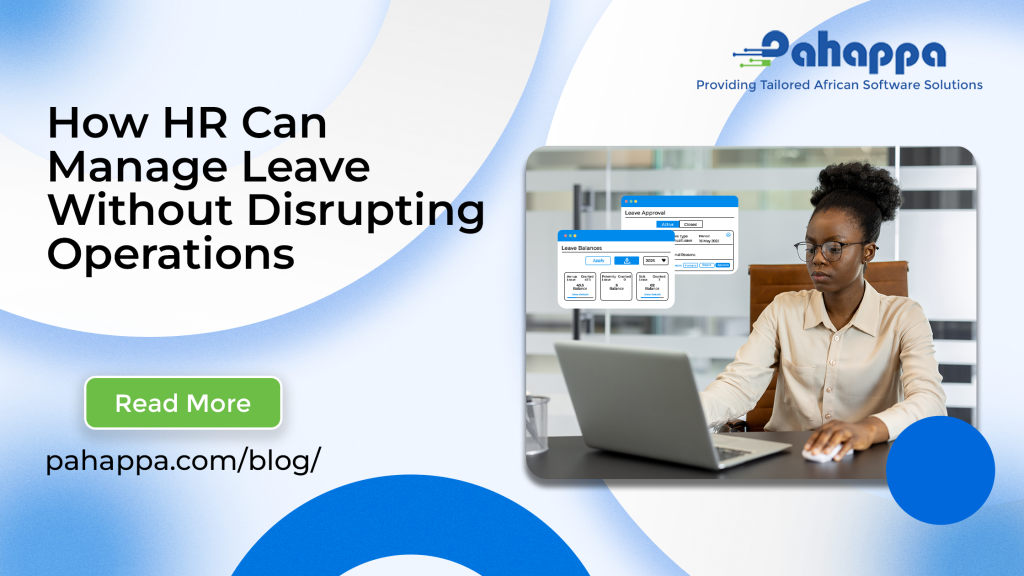
When leave is managed well, employees feel trusted, and everything runs smoothly. When it is managed poorly, it causes problems: missed handovers, payroll mistakes, uneven workloads, and unspoken frustrations about slow HR responses.
For organisations with 10 or more employees, leave is not just a form to fill out; it’s an important system. HR is responsible for ensuring that leave is fair, quick, compliant, and does not cause disruptions, all while avoiding becoming a bottleneck. This is why modern HR thinking is crucial: managing leave is part of workforce planning.
Here are some practical ways for HR to manage leave without disrupting work. Integrated HR software like PahappaHR helps by automating leave approvals, linking leave to attendance and payroll, and ensuring accuracy in HR processes.
The operational truth about leave
Leave impacts more than just staffing availability. It affects:
- Service delivery: This can lead to gaps in coverage, delays in projects, and slower response times.
- Payroll: Leave involves paid days off, pay deductions, overtime, and allowances.
- Attendance: It influences time records, patterns of lateness or absence, and compliance tracking.
- Performance: This includes meeting targets, completing deliverables, and setting the context for appraisals.
- Employee experience: It plays a role in fairness, trust, and employee retention.
Manual leave tracking using paper forms, email threads, and spreadsheets doesn’t work well as teams grow. Mistakes become more common, approvals take longer, and disputes arise. Modern HR leaders manage leave as a workflow that should be clear, easy to track, and straightforward.
Build a leave policy that prevents “surprise leave”
A clear leave policy is essential for your operations. It should answer common questions employees have, such as:
- How many leave days do I have?
- How far in advance do I need to apply?
- Who approves my leave?
- What if my manager is not available?
- Can I split my leave, carry it over, or convert it to cash?
- What is considered emergency leave?
Keep the policy straightforward, brief, and easy to search. Integrate it into your processes so that everyone follows it automatically, especially as new hires join or teams grow.
Many businesses use HR platforms to ensure that policies, entitlements, and approvals remain consistent across roles and departments. This helps reduce confusing situations and fosters fairness.
Standardise leave types and entitlements (don’t improvise)
Operational disruption often happens because of unclear leave categories. Instead of saying, “John is away next week,” HR should use specific leave types, such as: Annual leave, Sick leave, Maternity/paternity leave, Compassionate leave, Study leave, Unpaid leave
It’s important to have clear categories because:
- Leave entitlements are different
- Approval processes may vary
- Payroll handling changes
- Compliance requirements differ
PahappaHR can help by allowing organisations to set up their leave policies and track them centrally. This way, different departments and roles can have specific leave structures without HR having to create new processes each time.
Use a predictable approval workflow (with backups)
Leave disruptions often begin with delays, such as when a manager misses an email, HR has to follow up for signatures, or an employee is unsure if their leave is approved. Teams may plan work based on these unclear situations.
To create a smooth workflow for handling leave requests, it’s important to have:
- One clear path for approvals
- Automatic notifications
- Backup approvers are available when the main approver is unavailable
- Instant visibility of status (pending, approved, or rejected)
Automating leave approvals helps eliminate the “approval limbo” that can lead to scheduling conflicts and lost productivity.
Make leave visibility a shared responsibility.
HR should not be the only one who knows about employee absences.
- Your operations team needs:
- A team leave calendar
- Visibility by department or unit
Clarity on overlaps (too many people off at the same time)
This changes leave management from being just an HR task to part of operational planning.
Some leave systems offer central calendars and real-time leave history and balances. This helps managers make quicker staffing decisions without needing to go back and forth.
Connect leave to attendance
Here’s a common problem in managing operations:
“They were not at work, but they claim they asked for leave.”
When leave and attendance are tracked in different systems (or separate spreadsheets), it leads to:
- Conflicting records
- Compliance gaps
- Payroll mistakes
- HR disputes
Integrated HR systems link approved leave with attendance records, ensuring that reports are consistent and decisions are based on accurate information. PahappaHR emphasises automating leave approvals and attendance tracking to improve accuracy and reduce errors.
Connect leave to payroll
Another common issue is: “Payroll deducted days I was on approved leave.”
When leave isn’t linked to payroll rules, HR has to make manual adjustments. This process can be late, stressful, and prone to mistakes.
Modern payroll systems often show how gross pay, deductions, and net pay will look before approval. This helps reduce errors and builds trust. When leave is integrated, handling paid and unpaid leave is consistent and easy to track.
Set “operational guardrails” (leave quotas by role/team)
If everyone can take time off whenever they want, it could hurt our operations.
To prevent this, we can set some guidelines, such as:
- a limit on the percentage of a team that can be off at the same time
- blackout periods during busy seasons
- Rules for covering critical roles
- required handover documents for long leave
This is not about controlling employees; it’s about fairness and keeping things running smoothly.
Effective systems help HR and managers plan ahead and spot potential gaps in operations before they happen.
Use leave data to forecast disruption
To be a leader, stop reacting and start predicting.
Track the following:
- Monthly leave peaks
- Short leave patterns
- Groups of sick leave
- Departments with overlapping issues
Then, make adjustments to:
- Staffing plans
- Cross-training priorities
- Scheduling models
- Hiring timelines
PahappaHR focuses on real-time insights and integrated HR processes to help improve decision-making, not just administration.
Reduce HR workload with employee self-service
When all leave questions go to HR, it creates delays. Employee self-service allows:
- Checking leave balances without needing HR
- Faster leave applications
- Fewer emails asking “How many days do I have?”
- Clear history and status updates
This shift shows the difference between HR being overwhelmed and HR being strategic. PahappaHR focuses on automating HR processes to make things easier so teams can work on more important tasks.
Tie leave to performance management (fairly)
This is delicate but important. Never use leave as punishment for employees. Performance tracking should take into account:
- Timelines (adjust deliverables if someone is absent)
- Capacity planning (set realistic goals based on staffing)
- Manager accountability (ensure handover and continuity)
When performance management aligns with leave and attendance, HR can improve planning and fair evaluations. PahappaHR integrates performance management into its all-in-one HR suite.
What “disruption-free leave” looks like in practice
Here’s a clear standard to aim for:
- Employees can apply for leave in under 2 minutes.
- Managers can approve leave in under 2 minutes.
- Everyone can easily see the status of leave requests.
- Leave balances and records update automatically.
- Attendance records show approved leave.
- Payroll processes leave without extra manual work.
- HR can quickly pull reports for planning and compliance.
This is the difference between “leave tracking” and “leave governance.”
FAQs
How can HR manage leave without disrupting operations?
Use clear leave policies, predictable approvals, shared leave calendars, and automate leave tracking so it connects to attendance and payroll.
What causes leave to disrupt operations the most?
Slow approvals, poor visibility, overlapping leave in key teams, and manual systems that create payroll/attendance errors.
What’s the fastest way to reduce leave-related HR workload?
Employee self-service, automated approvals, and real-time leave balances.
Conclusion
Leave will always occur. The key question is how to handle it smoothly or with confusion.
When HR manages leave as a key process instead of just a task, you get better planning, fewer disputes, easier payroll, stronger compliance and happier employees and managers.
If your organisation has more than 10 employees and needs quick HR processes, think about using a system that combines leave, attendance, payroll, performance, and employee data. This way, leave can support well-being without disrupting work. Book a free PahappaHR demo today!