In growing organisations, time is crucial. Employees need clear schedules, managers require reliable attendance records, and HR teams seek to reduce administrative burdens. However, many still rely on outdated methods like paper registers and spreadsheets, which can lead to payroll disputes and scheduling issues as the workforce expands.
A biometric attendance system addresses this by linking attendance to verified employee identities. When integrated with an HR management platform, it transforms attendance from a daily task into valuable workforce intelligence. PahappaHR allows organisations to capture attendance via biometric devices, calculate working hours, monitor lateness and overtime, and integrate attendance records with leave and payroll workflows.
What Is a Biometric Attendance System?
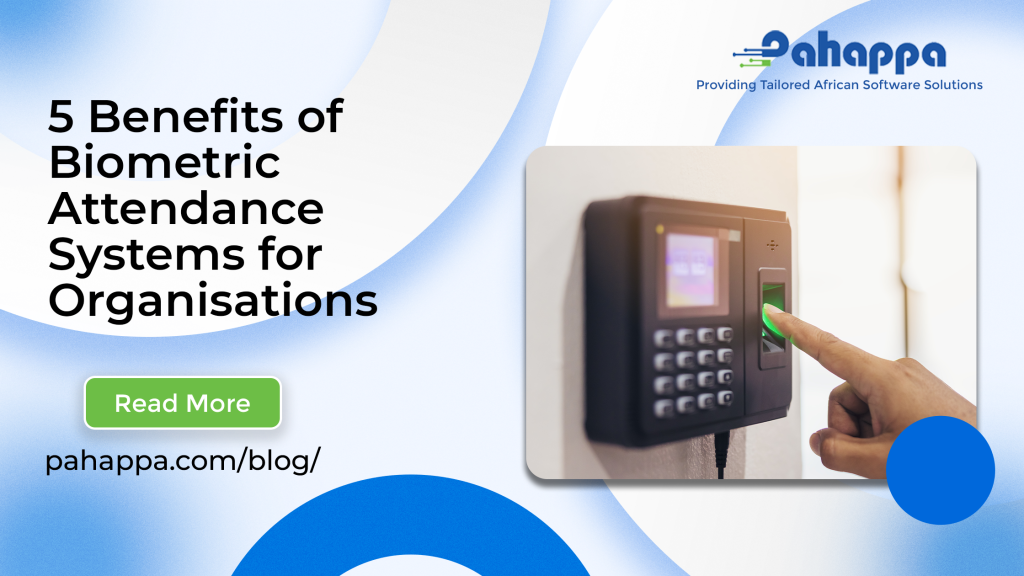
A biometric attendance system records employee clock-ins and clock-outs using unique physical or behavioural traits, like fingerprints or facial patterns, to verify identity. According to NIST, biometrics are characteristics used for recognition or verification.
In the workplace, employees present their biometric identifier at a device, which matches it with their enrolled record to create a time entry. The main advantage is that attendance records are more closely tied to individual employees than traditional methods like sign-in sheets or cards.
Biometric attendance is most valuable when integrated with shift scheduling, leave, overtime, payroll, reporting, and employee records.
Why Attendance Management Matters More as Organisations Grow
In an organisation with 60 employees, managing attendance becomes complex due to factors like approved leave, shift exchanges, and overtime. Without a central system, HR may face delays and errors in aligning records. Implementing a biometric attendance system with integrated HR software offers a more reliable solution for workforce management.
More Accurate Employee Attendance Records
A key benefit of a biometric attendance system is improved accuracy. Unlike manual registers that rely on employees to record time, biometric verification directly links clock-ins and clock-outs to individuals, reducing issues such as buddy punching and providing clearer attendance records.
With PahappaHR, organisations can automate attendance, access real-time data, and minimise issues such as lateness and overtime. This fosters workplace trust through a unified information source. Although biometric readings may not be flawless, PahappaHR provides structured workflows to review missed scans and ensure formal approval for any corrections.
Faster and More Reliable Payroll Processing
Attendance and payroll are interconnected, as inaccurate time records can disrupt salary calculations for both hourly and salaried employees. Manual data transfer from disconnected systems often requires verification among HR, supervisors, and finance.
PahappaHR streamlines this by allowing validated attendance data to flow directly into payroll, automatically updating records for approved leave. This centralised approach enhances organisation, speed, and reliability in the payroll process.
Less Administrative Work for HR Teams
HR professionals should prioritise supporting people and organisational performance while planning for future workforce needs. However, many get bogged down in administrative tasks such as attendance and timesheet management. Biometric attendance systems can automate these tasks by connecting attendance records and calculating hours.
Tools like PahappaHR integrate attendance management with payroll and other HR processes on a single platform. This automation is particularly beneficial for organisations with 10 or more employees, allowing HR teams to focus more on people-related tasks.
Better Compliance and Accountability
Reliable records are crucial for organisations to comply with labour laws across countries, industries, and employment types. Compliance is not guaranteed by organisational policies alone; it relies on configuration, policy, and legal requirements. HR supports compliance by generating reports on working hours, overtime, and absenteeism, which aid payroll reviews and audits.
Accountability improves with organisational rules, employees’ understanding of time recording, consistent manager approvals, documented corrections, aligned leave and attendance records, and accessible reports. This transparency benefits both the organisation and its employees.
Stronger Workforce Planning and Decision-Making
Biometric attendance provides more than just clock-in metrics; it provides organisational insights over time. Reliable attendance data helps leaders understand:
- Departments that frequently require overtime
- Consistently understaffed shifts
- Rising absenteeism in certain locations
- Scheduling patterns leading to reorganisations
- Overreliance on a small group of employees
- Recruitment or shift assignment adjustments needed
PahappaHR delivers reports on attendance trends, absenteeism, punctuality, and overorganisations, transforming attendance management into a strategic tool, for example, frequent reorganisations indicate understaffing or poorly designed schedules. Ultimately, reliable data enables informed workforce decisions and confident staffing plans.
How PahappaHR Connects Attendance to the Rest of HR
Attendance should be integrated with various HR processes. An employee’s absence may be due to approved leave, and overtime can impact payroll. Repeated lateness may need documentation, while shift coverage can influence recruitment.
PahappaHR connects attendance management with:
Payroll Management: Validated hours and overtime assist with salary processing.
Leave Management: Approved leave updates attendance records.
Performance Management: Goals and KPIs are managed alongside workforce information.
Staff Data Management: Centralised storage for employee details and contracts.
Shift Management: Schedule creation, conflict detection, and multi-location management.
Reporting: Review of attendance, absenteeism, punctuality, and hours worked.
Additionally, PahappaHR features an employee self-service portal, role-based access, and audit logs. The real value lies in the seamless transfer of information between interconnected HR processes.
What Should Organisations Consider Before Using Biometrics?
Biometric attendance provides benefits but must be implemented responsibly. Organisations should understand privacy and employment regulations before collecting biometric data.
Key considerations include:
- Define a legitimate purpose.
- Ensure lawful collection.
- Inform employees about data usage.
- Restrict access to authorised personnel.
- Set retention and deletion protocols.
- Offer alternatives for those unable to use biometric methods.
- Review device security.
- Train managers on fair data usage.
- Consult legal professionals if necessary.
Responsible management of biometric attendance should build trust and avoid unnecessary surveillance.
Frequently Asked Questions
Can biometric attendance prevent employees from clocking in for colleagues?
Biometric verification minimises risk by linking attendance to an enrolled individual rather than to a shared card or password. Organisations should still implement controls for exceptions, device errors, and record corrections.
Does biometric attendance improve payroll accuracy?
An integrated system enhances payroll accuracy by connecting verified working hours, overtime, leave, and attendance adjustments. PahappaHR links validated attendance data directly with payroll processing.
Can biometric attendance systems track overtime and lateness?
Yes. PahappaHR can track attendance by recording arrival and departure times, calculating working hours, and identifying late arrivals, early departures, and overtime.
Can PahappaHR work without biometric hardware?
PahappaHR allows organisations to use biometric devices or supervisor-managed attendance where biometric hardware is unavailable.
Conclusion
A biometric attendance system enhances HR processes by improving payroll, workforce planning, compliance, accountability, and operational decisions. Key benefits include accurate records, faster payroll, reduced administration, stronger accountability, and better workforce intelligence. For organisations with 10 or more employees, these advantages streamline operations and eliminate repetitive tasks. PahappaHR integrates biometric attendance with shift management, leave, payroll, performance, and reporting on a centralised platform, providing HR teams with essential visibility and fostering consistency across the workforce. Book a free PahappaHR demo today!