
Every minute counts when running a successful business. But when it comes to tracking employee attendance, many organisations still struggle with manual registers, spreadsheets, and outdated clock-in systems. What should be a simple daily process often becomes a frustrating administrative task for HR managers.
Imagine managing a growing company where employees arrive at different times, work varying shifts, and occasionally forget to record their attendance. How do you ensure everyone’s working hours are accurately captured without spending countless hours reviewing records?
Biometric attendance systems are changing how businesses manage their workforce. By making staff time tracking more accurate, transparent, and efficient, these systems help organisations focus less on administrative work and more on their people.
What Is a Biometric Attendance System?
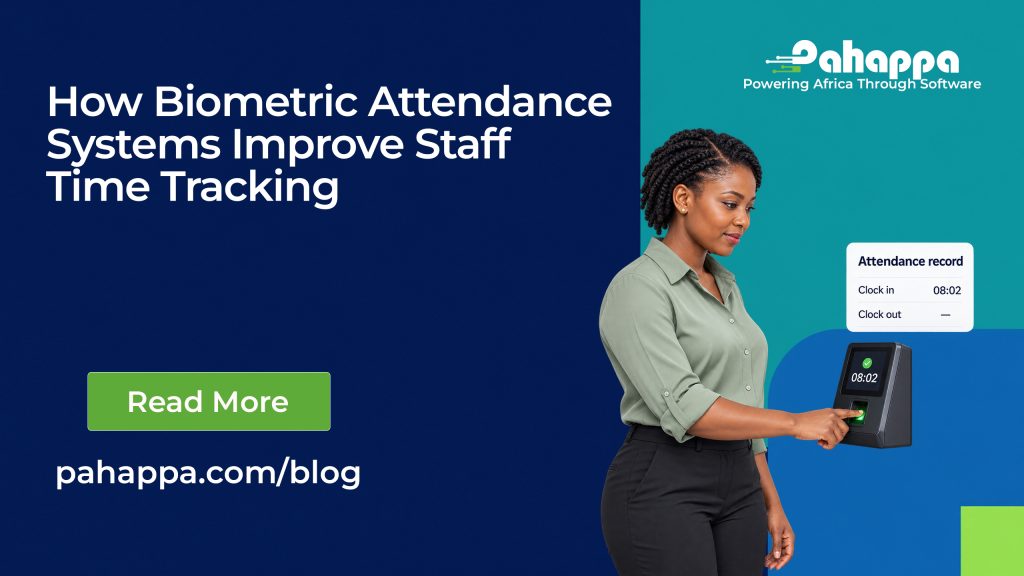
A biometric attendance system uses unique physical characteristics, such as fingerprints or facial recognition, to verify employees when they clock in or out of work.
Unlike traditional attendance registers or swipe cards, biometric systems link attendance records to an individual’s identity, reducing the risk of employees clocking in for colleagues, commonly known as buddy punching.
For businesses with 10 or more employees, reliable attendance records can significantly improve payroll processing, workforce planning, and overall operational efficiency.
Why Is Accurate Staff Time Tracking Important?
Employee attendance is more than a record of who arrived at work. It provides valuable insights into working hours, absenteeism, punctuality, and staffing requirements.
Inaccurate attendance information can affect the entire organisation. HR teams may struggle to calculate working hours, payroll discrepancies can arise, and managers may lack the information needed to make informed staffing decisions.
Accurate staff time tracking helps businesses build trust by ensuring employees’ working hours are recorded consistently and fairly.
A Day in the Life: How Biometric Attendance Simplifies HR
Meet Daniel, an HR manager at a growing Kampala company with over 60 employees.
Every month, Daniel spends hours reviewing attendance registers, following up on missing entries, and reconciling hours before processing payroll. When employees forget to sign in, or records are unclear, his workload increases.
Now imagine Daniel’s company introduces a biometric attendance system connected to its HR management software.
Instead of relying on handwritten records, employees verify their identity when reporting for work. The system automatically records clock-in and clock-out times, giving Daniel a clearer picture of attendance patterns.
When payroll preparation begins, Daniel can review attendance information without manually compiling multiple registers. He also has more reliable data to identify recurring lateness, plan staffing, and address attendance concerns fairly.
For Daniel, this means fewer administrative headaches. For employees, it means greater confidence that their working hours are properly documented.
This is the real value of attendance automation: giving HR teams more time to support employees and make better workforce decisions.
How Do Biometric Attendance Systems Improve Staff Time Tracking?
Reduce Time Theft and Attendance Errors
Traditional attendance methods can be vulnerable to inaccurate entries, forgotten signatures, and buddy punching.
Biometric verification helps confirm that the employee recording attendance is the person physically present. This improves accountability and reduces opportunities for attendance manipulation.
Automate Attendance Recording
Instead of manually entering working hours into spreadsheets, HR teams can use biometric systems to capture attendance events automatically.
When connected to compatible attendance management software, these records can support faster reporting and reduce repetitive administrative work.
Improve Payroll Accuracy
Attendance records play an important role in calculating payable hours, overtime, and certain payroll adjustments.
By connecting reliable time-tracking data with payroll management processes, organisations can reduce manual reconciliation and improve payroll accuracy.
However, accurate payroll still depends on properly configured pay rules, approved overtime, and applicable labour requirements.
Support Better Workforce Planning
Reliable attendance data helps managers identify patterns in absenteeism, lateness, and shift coverage.
These insights make it easier to allocate staff, anticipate scheduling challenges, and make informed workforce management decisions.
Promote Transparency and Fairness
Employees want to know that their time and contributions are recognised.
Consistent attendance records can reduce disputes about working hours and support fairer application of workplace attendance policies.
Introduce biometric systems with clear employee communication, appropriate privacy safeguards, and consideration of applicable data protection laws.
How Can PahappaHR Support Smarter Attendance Management?
Biometric devices capture attendance, but organisations need more than a clock-in record to manage their workforce effectively.
This is where PahappaHR, an HR and payroll management software solution, comes in.
PahappaHR helps businesses streamline essential HR processes through attendance, payroll, leave, performance, and staff data management.
By bringing these HR functions into a more organised system, businesses can reduce administrative complexity, improve access to workforce information, and support more informed decisions.
For growing organisations across Africa, PahappaHR also offers a subscription-based approach and customer support, making it an option worth considering for businesses seeking practical HR automation.
Organisations looking to connect biometric attendance devices should confirm device compatibility, integration capabilities, and implementation requirements with the PahappaHR team.
Are Biometric Attendance Systems Worth It for Growing Businesses?
For organisations managing increasing employee numbers, biometric attendance systems can be a worthwhile investment when attendance accuracy, payroll efficiency, and accountability are recurring challenges.
The greatest value comes not simply from installing biometric devices, but from using trustworthy attendance information to improve everyday HR decisions.
Before adopting a system, businesses should evaluate implementation costs, employee privacy, device reliability, and how attendance records will connect with existing HR workflows.
Conclusion
Effective staff time tracking is not about watching every minute employees spend at work. It’s about creating a workplace where attendance records are accurate, HR processes are efficient, and employees are treated fairly.
Biometric attendance systems can help organisations achieve this by reducing manual errors, improving accountability, and providing more reliable workforce information.
Combined with effective HR management software, accurate attendance data can become a valuable foundation for smarter workforce management.
Ready to simplify your HR processes? Book a free PahappaHR demo today!