When a business starts growing, overtime can quietly become one of the most sensitive parts of workforce management. A few extra hours here, a weekend shift there, a missed clock-out on Friday, and suddenly HR, payroll, and line managers are trying to answer the same difficult question: what is the fair amount to pay?
That question matters more than many organisations realise. Overtime is not just a payroll line item. It affects trust, morale, legal risk, manager credibility, and how employees feel about the company they work for. When overtime is calculated poorly, people notice. When it is calculated fairly, people notice.
For organisations with 10 or more employees, manual overtime tracking often becomes too slow and too risky. That is where attendance systems make a real difference. PahappaHR is built to automate attendance, payroll, leave, performance, and staff data in a single platform, with features such as biometric time tracking, PAYE and NSSF payroll support, self-service access, and local customer support designed for African organisations.
The Real Meaning of Fair Overtime
Fair overtime is more than just paying extra for extra hours. It requires a clear, consistent approach that follows company rules and labour laws. In Uganda, the Employment Act states that hours over eight per day or forty-eight per week are overtime, unless there is a written agreement. Overtime must be paid at least 1.5 times the normal rate on regular days and 2 times on public holidays.
Fair overtime also depends on good management. Incomplete attendance records or informal hours approval can lead to mistakes, even with a solid policy in place. The International Labour Organisation highlights the need for accurate recording of hours and higher pay for overtime.
Why Manual Overtime Calculation Breaks Down
Imagine an HR manager at a busy company with 60 employees in operations, sales, and support. Some have fixed schedules, while others arrive early, leave late, or rotate shifts. A few forget to sign attendance sheets, and team leads often approve extra hours verbally.
When payroll arrives, HR must determine who worked when and which hours were approved. This can lead to fairness issues; one employee might be underpaid for missing a sign-in, while another might be overpaid due to a duplicate entry. These mistakes affect employee trust in the company.
Attendance systems help by providing one clear record. For example, PahappaHR combines attendance tracking, payroll, leave requests, performance tools, and employee records, reducing the need for multiple spreadsheets. This system helps reduce errors, save time, and allows HR teams to focus on important tasks.
How To Calculate Overtime Fairly Using Attendance Systems
Define Normal Working Hours
Establish what counts as standard time based on the official work schedule for each employee group. In Uganda, the Employment Act sets a benchmark of forty-eight hours per week, with overtime defined as beyond eight hours a day or forty-eight hours weekly unless stated otherwise.
Capture Time Automatically
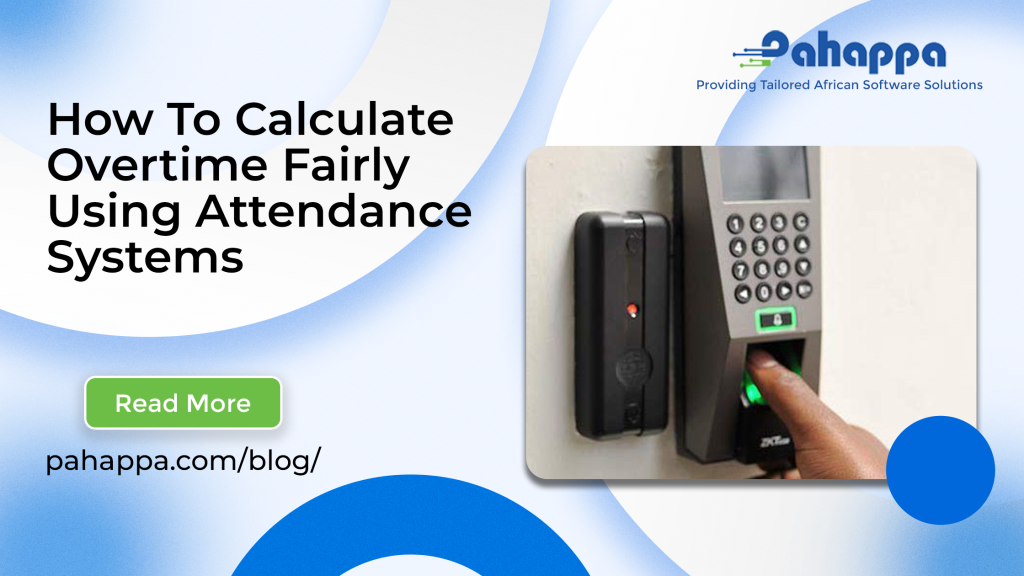
Use a reliable attendance process for clocking in and out, ideally with digital logs to eliminate inaccuracies from memory. Automated records prevent disputes over actual hours worked.
Separate Worked Hours from Approved Overtime
Not all extra minutes count as payable overtime. Distinguish between hours worked, scheduled hours, approved overtime, and compensatory arrangements. A structured approval workflow can help manage this effectively.
Apply Correct Overtime Rates
Ensure that approved overtime hours are compensated at the right rate, at least 1.5 times the hourly rate on regular days and 2 times on public holidays, according to Ugandan law. An efficient payroll system can automate this process.
Factor in Leave and Holidays
Your calculations must consider factors like leave status, public holidays, and shift patterns to ensure fairness across attendance and leave data.
Provide Employee Visibility
Enable employees to see their attendance records, leave status, and payslips easily. This transparency fosters trust and helps resolve disputes quickly.
Analyse Overtime Trends
Use reports to identify why overtime occurs frequently. High overtime in a department could signal issues like understaffing or poor scheduling. This analysis aids in strategic workforce planning.
What Sets PahappaHR Apart
In many African organisations, the challenge is not finding software but finding one that fits local HR realities. PahappaHR presents itself as an all-in-one HR system for organisations with 10 or more employees, offering African-tailored payroll, biometric attendance, performance frameworks, flexible pricing, and free local support. It distinguishes itself from other HR software by providing these localised features.
Understanding local payroll, attendance tracking, and leave policies is crucial for fair overtime calculations, as is the ability to quickly access customer support. Additionally, a subscription-based model with flexible pricing is more accessible for growing organisations than high upfront costs.
Frequently Asked Questions (FAQs)
What is the best way to calculate overtime fairly?
Combine a clear overtime policy with accurate attendance records and payroll automation. Use real-time data and apply the correct rate consistently to ensure fairness and comply with labour laws.
Can attendance systems reduce overtime disputes?
Digital attendance systems ensure accurate clock-in and clock-out records, reducing disputes, especially when integrated with approval workflows and payroll processing. PahappaHR focuses on attendance tracking, biometrics, and payroll automation.
How does PahappaHR help with overtime management?
PahappaHR integrates attendance tracking, payroll management, leave management, and employee self-service, allowing HR teams to calculate overtime accurately from clean records.
Why should payroll and attendance be in the same system?
Disconnected systems can lead to errors. An integrated approach allows for accurate overtime calculations using approved, up-to-date data, making it advantageous for growing organisations.
Conclusion
Fair overtime relies on clear rules, accurate attendance, timely approvals, payroll integration, and transparent communication. That is why modern organisations are moving from spreadsheets to connected HR systems.
For African businesses aiming to streamline HR operations and improve efficiency, PahappaHR offers a practical solution. With features such as attendance management, payroll, leave, performance tracking, and local support, it ensures overtime is calculated quickly and fairly. Book a free PahappaHR demo to get started today