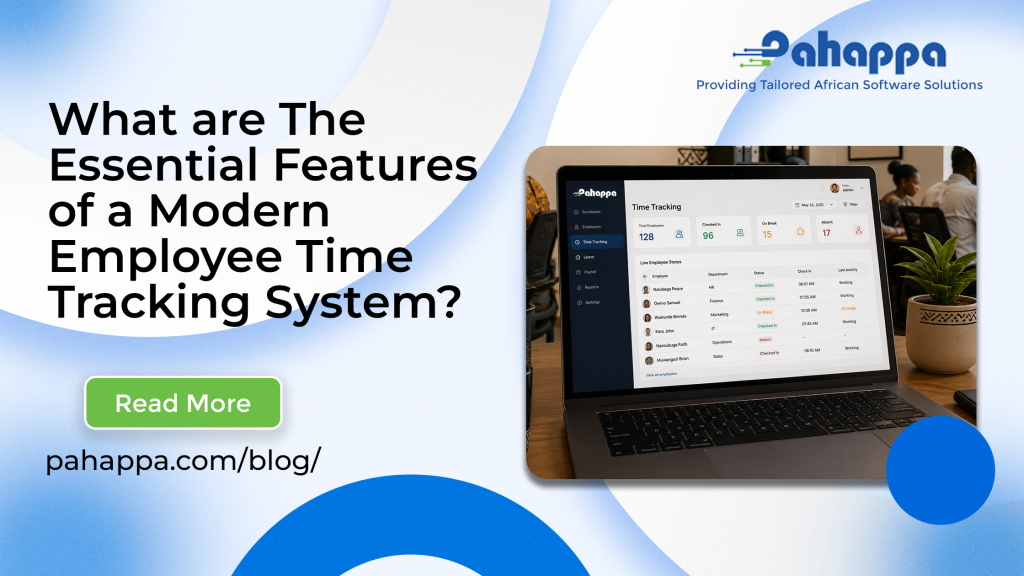
At the heart of every productive organization is a team that knows when to show up, where to focus, and how their time contributes to business growth. For many organizations across Africa, especially those with 10 or more employees, employee time tracking is no longer just about clocking in and clocking out. It has become a smart way to protect productivity, support payroll accuracy, improve compliance, and build trust between employers and employees.
Picture this: your company is growing. You now have field staff, office employees, remote workers, supervisors, interns, and contract staff. Some arrive early. Others work shifts. A few request time off. HR has to track attendance, calculate payroll, manage leave, monitor performance, and keep employee records accurate. When all of this is handled manually, even a small mistake can become a costly headache.
That’s where modern employee time tracking comes in.
A modern time tracking system does more than record hours. It connects attendance management, leave management, payroll management, staff data management, and performance management into one smooth HR process. With a solution like PahappaHR, organizations can automate leave, attendance, payroll, and performance so HR teams spend less time on admin and more time supporting people.
Why Employee Time Tracking Matters for Modern Organisations?
Time is a valuable resource in any business and is often lost due to ineffective tracking methods. When HR relies on paper registers, spreadsheets, or WhatsApp, issues like missing records, payroll disputes, and unclear attendance reports arise. This can lead to productivity impacts before managers realise who is available or absent.
Modern employee time tracking provides essential insights such as:
- Who is at work or absent
- Who is on leave
- Who worked overtime
- Team workloads
- Attendance patterns affecting performance
For growing companies, these insights enable better decision-making and ensure fair treatment of employees based on accurate data rather than guesswork.
Accurate Attendance Management
A modern employee time tracking system’s key feature is accurate attendance management. It should record employee work hours to ensure compliance with schedules, especially in businesses with multiple departments or shifts. PahappaHR offers attendance management with biometric integration for reliable time tracking, reducing errors from manual processes.
Clear attendance data benefits businesses by reducing time theft, improving punctuality, monitoring absenteeism, supporting fair payroll, and identifying staffing gaps. This clarity allows HR to spend less time on records, gives managers better visibility, and builds employee trust in recorded hours.
Seamless Payroll Management Integration
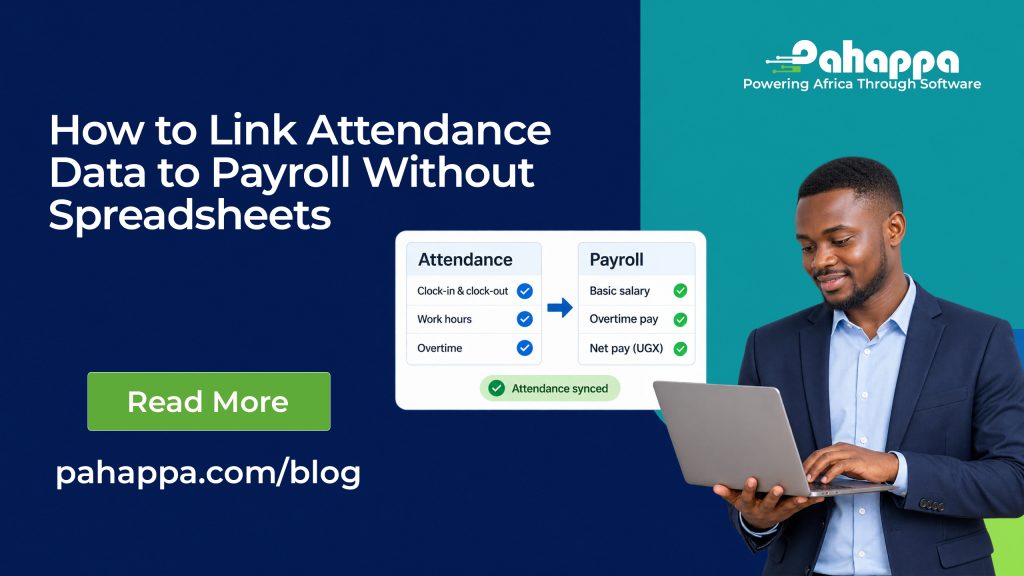
Employee time tracking should integrate with payroll management because attendance directly impacts salary. Late arrivals, absences, overtime, and allowances all affect payroll accuracy, making manual data transfers error-prone.
Modern time tracking systems should streamline payroll by providing accurate work-hour data. PahappaHR offers payroll generation with built-in PAYE and NSSF calculations, benefits, and approval workflows for various staff categories.
A time-tracking system with payroll integration enables organisations to pay employees accurately, reduce disputes, improve compliance, save time for HR and finance teams, and build employee confidence in salary processes. Accurate time data ensures accurate payroll.
Leave and Time-Off Management
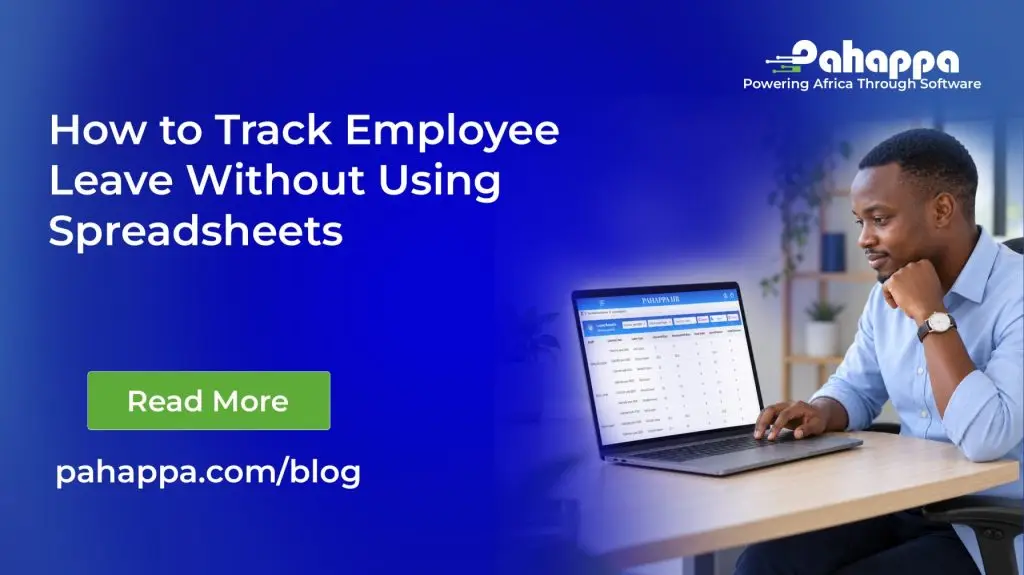
Time tracking isn’t complete without leave management. Employees need various types of leave, such as annual leave, sick leave, maternity leave, and personal time off. A modern system should simplify leave requests and approvals for both employees and managers.
PahappaHR offers a self-service portal for leave requests and helps HR teams manage approvals more effectively, clearing up common confusion. Without a proper leave system, employees may not know their available days, managers might overlook team availability, and HR could face issues with payroll and attendance.
Essential features of a good leave management system include:
- Leave balances
- Leave history
- Approval status
- Team availability
- Leave policy rules
By automating these processes, employees can confidently plan their time off while ensuring fairness in the organisation.
Employee Self-Service Portal
A modern employee time tracking system should empower staff without overwhelming HR. PahappaHR features an employee self-service portal where employees can update personal information, view payslips, request time off, and track performance. This enhances the employee experience by allowing them to find answers to common questions without contacting HR. As a result, HR can reduce repetitive tasks, employees gain transparency, and management enjoys a smoother flow of information.
Centralised Staff Data Management
Good time tracking relies on accurate employee data. When records are scattered across various formats, errors are likely. A modern time-tracking system should feature a central database to store personal details, contracts, documents, job roles, and departments.
PahappaHR offers this centralised employee database, ensuring accurate records and informed workforce decisions. For instance, to analyse attendance by department or manage payroll effectively, clean and precise staff data is essential. Centralised data management transforms fragmented HR information into a single, reliable source of truth.
Performance Management Integration
Time tracking should answer not just “Was the employee present?” but also “Was the employee productive?” Attendance alone doesn’t guarantee performance; someone can be present yet miss goals, while another may work fewer hours but achieve excellent results.
PahappaHR enhances performance tracking through SMART goals, KPI monitoring, custom appraisals, and comprehensive reports. This combination allows managers to gain insights into employee contributions.
When attendance and performance data align, leaders can identify patterns, such as high attendance with low output, frequent absences impacting targets, overworked teams, high achievers who need recognition, and departments requiring better workforce planning. This approach positions HR as a strategic partner in understanding how time influences performance.
Automation of Routine HR Tasks
Manual HR tasks like checking attendance, updating leave balances, and calculating payroll can take hours weekly. PahappaHR automates these processes, improving efficiency and accuracy in payroll, leave approvals, and performance management.
Automation benefits organisations by saving time, reducing errors, speeding up approvals, and simplifying reporting. For companies with 10 or more employees, automation is essential to manage growth effectively.
Compliance Support for Labour and Payroll Regulations
Organisations must prioritise compliance, particularly in payroll. Employee time tracking is essential for maintaining accurate records of attendance, leave, and work hours, which are crucial during audits and disputes. In Uganda, this includes adhering to PAYE and NSSF regulations, which are integrated into PahappaHR’s payroll system.
Compliance is about more than just avoiding penalties; it fosters a fair workplace and professional record-keeping. A modern time tracking system should provide clear audit trails, role-based access, secure records, accurate payroll data, leave history, and policy-based approvals. By embedding compliance into HR processes, organisations can minimise risk and enhance confidence in their operations.
Reports and Workforce Insights
A modern employee time tracking system should transform raw data into valuable insights for HR leaders and managers. Key reports help organisations understand workforce trends, such as absenteeism, lateness, overtime, leave usage, payroll impacts, and team productivity.
Without reports, time tracking is merely a digital register; with them, it becomes a strategic tool. Effective reports can answer critical questions about absenteeism by department, overtime costs, employee leave balance, staffing needs, and the impact of attendance issues on performance. These insights aid in strategic decision-making and workforce planning.
FAQs
What is employee time tracking?
Employee time tracking involves recording working hours, attendance, absences, leave, and overtime. Modern systems do this digitally and integrate data with HR functions like payroll and performance management.
Why is employee time tracking important?
It helps organisations track attendance, manage payroll, and identify productivity gaps, while enhancing fairness, accountability, compliance, and workforce planning.
Can time tracking improve payroll accuracy?
Connecting attendance and leave data directly to payroll reduces errors and salary disputes, ensuring employees are paid correctly and on time.
Does PahappaHR support payroll compliance?
PahappaHR includes payroll features with PAYE and NSSF calculations, benefits, allowances, and approval workflows to meet local statutory requirements.
Conclusion
Modern employee time tracking has evolved beyond just recording attendance. It now supports better payroll, streamlined leave management, compliance, performance improvement, and smarter workforce decisions. For growing organisations with 10 or more employees, the right system can transform HR chaos into efficient processes, freeing HR teams to focus on people and enabling managers to make informed decisions.
PahappaHR offers a comprehensive HR software solution tailored for African teams, featuring attendance and payroll management, leave tracking, performance monitoring, staff data management, and automation. This helps organisations save time, reduce errors, and create thriving workplaces. Book a free PahappaHR demo today!