Every productive organisation relies on the promise that the right people are available at the right time for essential work.
However, as businesses grow, maintaining this promise becomes more challenging. Managers may know who was scheduled, but not who arrived late. Meanwhile, HR may handle timesheets without payroll confirming overtime and absences. Records of additional hours may also be scattered across several platforms.
What seems like a simple scheduling issue can quickly create problems in payroll, compliance, and workforce planning.
A more effective solution is to connect shift expectations, attendance, timesheets, leave records, approvals, and payroll data in one HR process. This gives managers better visibility, reduces administrative work, and helps ensure that employees’ working hours are recorded accurately.
What Is Shift and Employee Timesheet Management?
Shift and employee timesheet management involves planning employee work schedules, recording actual hours worked, approving exceptions, and using verified time data for payroll and compliance.
Shifts show when employees are expected to work. Timesheets, on the other hand, record the hours they actually worked.
Together, they help HR and operations teams answer important questions:
- Who was scheduled, and who attended?
- How many hours did employees work?
- Were there late arrivals, early departures, or absences?
- Has a manager approved the record?
- Is payroll based on accurate data?
- Are some employees or departments overworked?
These insights are important for staffing, labour costs, service delivery, employee well-being, and overall business performance.
Why Manual Timesheets Create More Than Administrative Work
Manual timesheets do more than increase paperwork. They can also affect payroll, visibility, employee trust, and compliance.
Payroll Becomes Harder to Verify
When payroll teams receive incomplete time records, they spend more time checking overtime, leave, and other exceptions.
Small errors can lead to disputes, delays, and higher costs.
PahappaHR streamlines attendance, leave, payroll, performance, and employee records. It also supports approval workflows and statutory calculations such as PAYE and NSSF.
Managers Lose Operational Visibility
A schedule may show that a team is fully staffed. However, it does not confirm that every scheduled employee reported for work.
Without accurate attendance and timesheet data, managers may only notice staffing gaps after they affect customer service, production, or team performance.
Employees Lose Confidence in the Process
Employees want assurance that their hours, leave, and overtime are managed fairly.
However, relying on memory or informal methods can create uncertainty and reduce trust. Employees may feel that they need to prove the hours they worked.
Compliance Becomes Reactive
Working-time requirements differ by country, sector, and agreement. Therefore, organisations need accurate records to meet their obligations.
In Uganda, hours worked beyond 48 in a week are considered overtime. However, organisations must also consider contracts and sector-specific rules.
The International Labour Organisation recommends that employers understand rules on working hours, rest, and overtime. It also recommends keeping accurate working-time records.
Technology cannot replace legal advice or sound HR policies. However, it can help organisations apply policies consistently and retrieve information more easily during reviews.
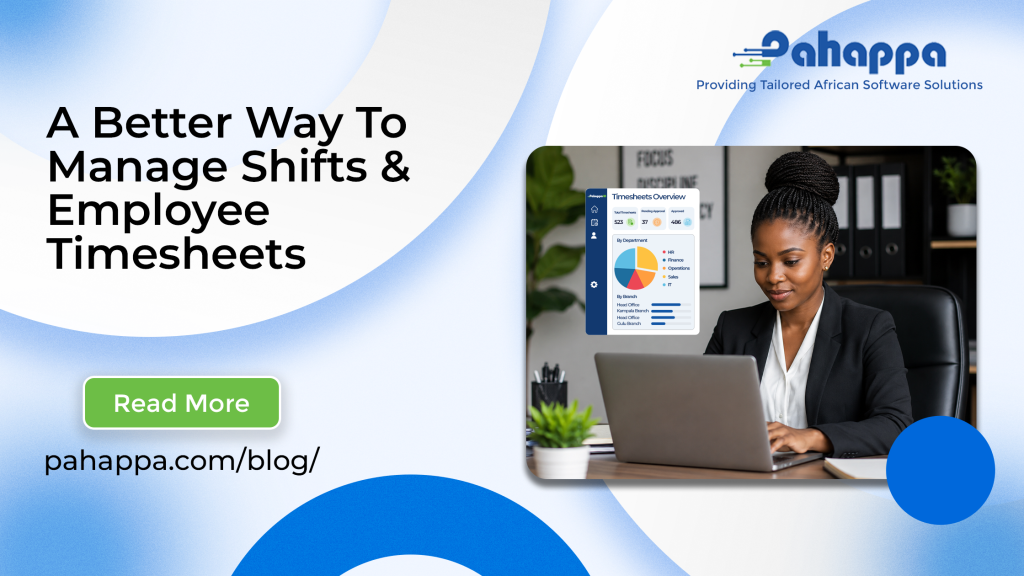
A Better Way to Manage Shifts and Employee Timesheets
A better approach connects employee data, attendance, timesheets, leave, approvals, and payroll.
This creates a clearer process and gives managers better information for decision-making.
Create One Reliable Source of Workforce Data
Effective time management requires accurate employee information.
Key details should be kept in one place, including:
- Department
- Role
- Employment status
- Reporting manager
- Leave history
- Attendance records
PahappaHR provides a central employee database and a self-service portal. Employees can use the portal to access records, view payslips, request time off, and track performance.
As a result, centralisation reduces duplicate records and helps managers review attendance and timesheet exceptions.
Connect Attendance Records to Employee Timesheets
Attendance data and timesheet data serve related but different purposes.
Attendance confirms whether an employee reported for work. It may also record arrival and departure times.
A timesheet, by contrast, provides details about hours spent on tasks, projects, or clients.
Connecting both records makes reviews easier.
For example, a timesheet may show ten working hours, while attendance shows eight. This does not always mean there is an error. The employee may have worked remotely or attended an external meeting.
Therefore, the difference should prompt a review rather than a search through unrelated messages.
PahappaHR provides attendance management with biometric integration, as well as timesheets and performance reports.
Build Clear Approval Workflows
Effective timesheet management depends on accountability, not constant monitoring.
Employees should know:
- What information to submit
- When to submit it
- Who will review it
- How to make corrections
- Which activities require approval
- How overtime is authorised
Managers should also be able to identify exceptions without checking every record manually.
A structured workflow can route timesheets to supervisors, record approvals, return incomplete submissions for correction, and maintain a clear history of actions.
As a result, employees, managers, HR, and payroll teams all understand their responsibilities.
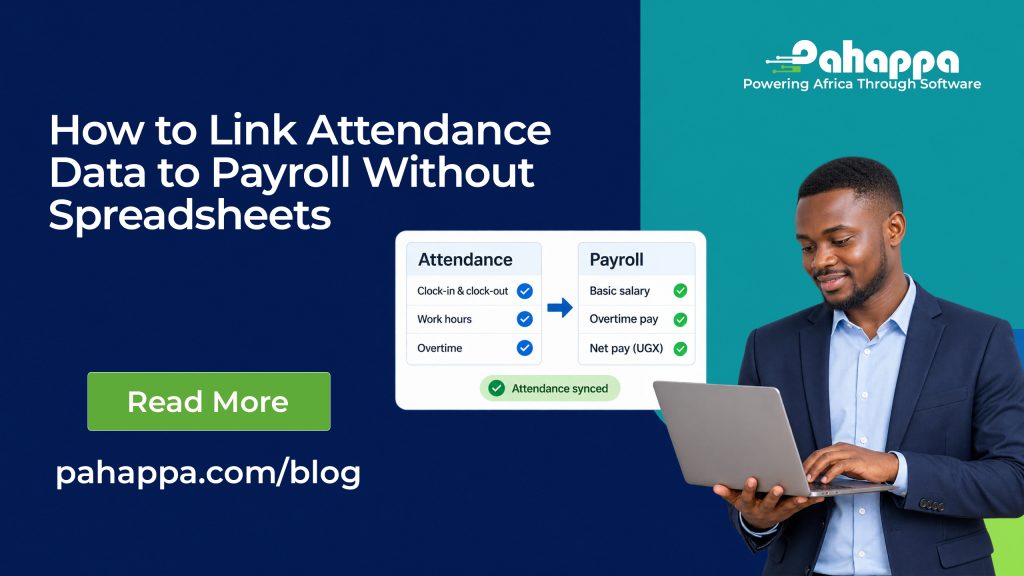
Link Approved Time Records to Payroll
Timesheets are most useful when payroll can use verified information without repeated data entry.
Approved working hours may affect:
- Overtime
- Absences
- Allowances
- Project costs
When payroll is separate from attendance, HR may need to transfer data manually. This increases the risk of errors.
PahappaHR connects attendance, employee data, and payroll workflows. It supports payroll generation, benefits, PAYE and NSSF calculations, and different payroll categories.
Organisations should also configure pay rules according to contracts and labour requirements. This helps ensure that hours and exceptions are handled correctly.
Make Leave Part of Workforce Planning
Accurate shift planning depends on knowing which employees are available.
When leave management is separate from scheduling, managers may assign shifts to employees who already have approved time off. This can lead to last-minute replacements.
A connected leave process gives managers early visibility into absences. As a result, they can plan coverage more effectively.
PahappaHR connects time-off requests and leave approval workflows. This improves efficiency and helps employees plan personal commitments with confidence.
Use Time Data to Improve Workforce Decisions
Timesheets should do more than help close payroll.
They can also help leaders identify important patterns, such as:
- Departments with excessive overtime
- Consistently understaffed shifts
- Projects using more labour hours than expected
- Frequent team absences
- Uneven workloads across roles
- Peak periods that need extra coverage
These insights can support recruitment, budgeting, project planning, performance discussions, and process improvement.
The goal is not to reduce all working hours. Instead, it is to understand how time is used and ensure that people are deployed effectively and responsibly.
How PahappaHR Supports Smarter Workforce Management
PahappaHR brings key HR processes into one platform.
It connects attendance, payroll, leave, performance, and employee information across the employee journey.
Key features include:
- Biometric attendance management
- Timesheets and performance reports
- Payroll workflows
- Leave request processes
- Central employee database
- Employee self-service
- Goal and KPI tracking
- Custom performance appraisals
- Role-based access and audit logs
- Recruitment and onboarding
PahappaHR is designed for organisations with 10 or more employees. It also offers scalable pricing, which makes it suitable for growing businesses moving away from informal HR processes.
Frequently Asked Questions
What Is an Employee Timesheet?
An employee timesheet records the hours an employee worked during a specific period. It may also include shifts, projects, tasks, and overtime.
What Is the Difference Between a Shift Schedule and a Timesheet?
A shift schedule shows when an employee is expected to work. A timesheet records the hours the employee actually worked.
Comparing both helps managers identify issues such as absences and overtime.
Why Should Timesheets Be Connected to Attendance?
Connecting timesheets to attendance makes it easier to identify differences.
It also gives managers a clearer view of scheduled hours and submitted work.
Is Timesheet Software Useful for Salaried Employees?
Yes. Timesheet software can support project costing, client billing, and performance reporting, even when employees are not paid by the hour.
Conclusion
Managing shifts and employee timesheets should not require HR teams to rebuild monthly records.
Instead, information should flow clearly from employee records to attendance, timesheets, and payroll.
When these processes work together, everyone benefits. Employees gain transparency, managers gain better visibility, payroll relies on accurate data, and HR can focus on people rather than paperwork.
PahappaHR helps organisations automate HR processes and manage attendance, leave, payroll, performance, and employee information from one platform.
Book a free demo today to see how PahappaHR can support your organisation.