In growing organisations, knowing “Who is available today?” evolves into a critical concern. For companies with 10 or more employees, managing leave impacts deadlines, payroll, customer service, team morale, compliance, and workforce planning. Without clear visibility into leave, managers rely on assumptions, which can be costly.
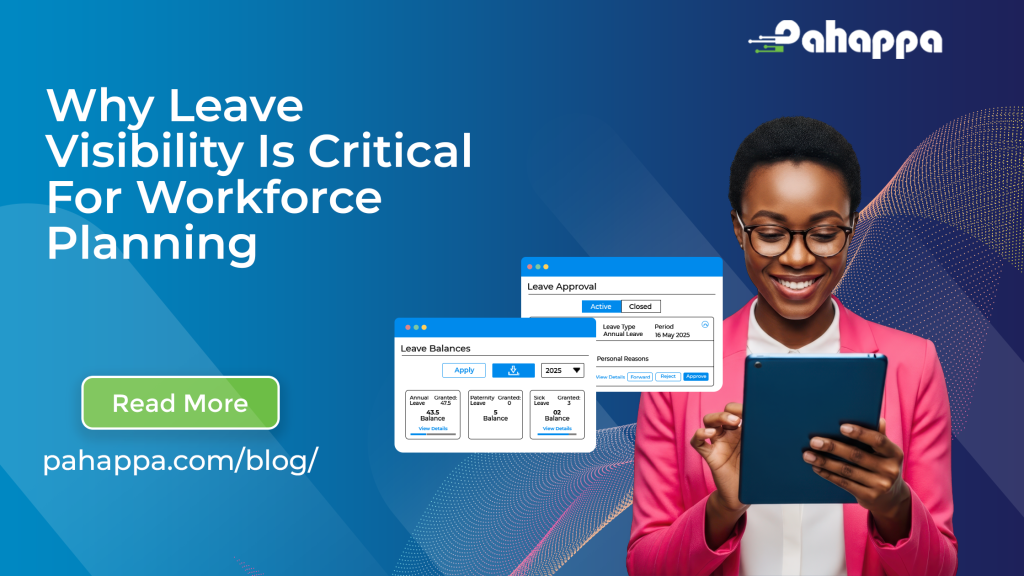
Leave visibility provides a real-time understanding of employee availability, showing who is on leave, pending requests, and remaining leave balances. This information allows for more strategic, efficient, and accurate workforce planning.
The Growing Importance of Leave Visibility
As businesses grow, so does the complexity of managing people. A small team may be able to handle leave requests through emails, spreadsheets, or verbal approvals. However, as employee numbers increase, these methods quickly become inefficient.
Consider a growing company where employees are taking annual leave, sick leave, maternity leave, and personal leave at different times throughout the year. Without proper visibility, managers may unknowingly approve overlapping requests, leaving critical departments understaffed. Payroll teams may struggle to reconcile attendance records, while HR departments spend valuable hours tracking balances and resolving disputes.
What begins as a simple administrative task can soon become a significant operational challenge.
Leave visibility eliminates this uncertainty by providing a centralised view of employee leave information. Instead of searching through spreadsheets or email chains, decision-makers can access the information they need instantly and make informed staffing decisions.
The Hidden Costs of Poor Leave Management
Many organisations underestimate the impact of poor leave visibility until problems surface.
A manager approves a leave request without realising another key team member will be absent during the same period. A payroll officer works with outdated attendance records, leading to payment errors. Employees become frustrated when they cannot easily access their leave balances or receive timely updates on their requests.
Over time, these issues affect productivity, employee satisfaction, and operational efficiency. They can also expose organisations to compliance risks if leave records are inaccurate or poorly maintained.
More importantly, poor leave visibility can damage employee trust. When employees feel that leave processes are inconsistent or unclear, they may perceive the workplace as unfair. This perception can negatively affect morale, engagement, and retention.
Organisations that prioritise visibility create a more transparent environment in which employees understand their entitlements and managers can make fair, informed decisions.
A Real-World Workforce Planning Challenge
Daniel, a busy operations manager at a rapidly growing company, faces challenges every Friday morning as he prepares for the upcoming week. He finds that three employees from the same department will be absent on Monday due to various approved leaves, which could cause issues with deadlines and increase workloads for the remaining staff.
Without a centralised leave management system, these approvals go unnoticed until it’s too late. However, with a modern system like PahappaHR, Daniel can easily view leave schedules, assess staffing levels, and make informed decisions. This proactive approach not only improves convenience but also enhances overall business planning.
How Leave Visibility Supports Strategic Workforce Planning
Workforce planning is about ensuring the right people are available at the right time to achieve organisational goals.
To accomplish this, business leaders need reliable workforce data. Leave visibility provides valuable insights that help organisations move beyond day-to-day administration and make more strategic decisions.
When leave data is accessible and accurate, leaders can identify seasonal staffing trends, anticipate workforce shortages, and allocate resources more effectively. They can determine whether specific departments experience higher absence rates and adjust staffing plans accordingly.
Organisations can also use leave information to support succession planning, project management, and recruitment decisions. By understanding patterns in employee availability, leaders gain a clearer picture of future workforce requirements.
This level of insight transforms leave management from an administrative function into a strategic business tool.
Why Leave Visibility Matters for Employee Well-Being
Effective workforce planning goes beyond productivity; it also prioritises employee support. When staff can easily submit leave requests and check their balances, it reduces stress and uncertainty. A transparent leave process fosters a positive experience, showing the organisation values well-being. Managers also gain visibility into team schedules, enabling better workload management and reducing burnout caused by understaffing. The outcome is a healthier, more engaged workforce.
The Role of Technology in Modern Leave Management
Manual leave management processes may have worked in the past, but today’s organisations require greater speed, accuracy, and visibility.
Modern HR systems automate leave requests, approvals, tracking, and reporting. This reduces administrative burdens while improving data accuracy across the organisation.
PahappaHR is designed to help organisations streamline HR operations through integrated leave, payroll, attendance, performance, and staff data management capabilities.
Rather than managing employee information across multiple disconnected systems, organisations can access everything from a single platform. This integration helps eliminate duplicate data entry, reduce errors, and ensure consistency across HR processes.
For HR teams, this means spending less time on repetitive administrative work and more time supporting strategic business objectives.
How PahappaHR Helps Growing Organisations?
For organisations with 10 or more employees, efficiency is crucial. PahappaHR simplifies workforce management by automating HR tasks and offering better access to employee information. Leave requests can be handled digitally, attendance tracking is more accurate, and payroll processes are streamlined.
PahappaHR also supports compliance by maintaining accurate employee records and leave histories, thereby reducing disputes and meeting labour requirements. Designed to be affordable, it’s accessible for growing businesses across Africa, with responsive customer support and a scalable subscription-based pricing model.
Looking Beyond Leave Management
While leave visibility is critical, its true value becomes even more apparent when connected to broader workforce management processes.
Leave data affects attendance tracking. Attendance impacts payroll. Payroll influences employee satisfaction. Performance management depends on accurate workforce information.
When these functions operate together, organisations gain a complete view of their workforce and can make better decisions at every level.
This is why leading organisations increasingly view leave management as part of a larger workforce strategy rather than a standalone HR function.
Conclusion
Leave visibility is now essential for effective workforce planning in any growing organisation, not just large enterprises. Real-time insights into employee availability enhance decision-making, productivity, employee well-being, and compliance.
PahappaHR supports this by integrating leave management, payroll, attendance, performance, and staff data into one platform, resulting in improved visibility and efficiency. When leaders have clear visibility of their workforce, they can confidently plan for the future. Book a free PahappaHR demo to get started today!